Navy Blazer for Men
A structured jacket that earns its place by adding deliberate formality without forcing a full suit — and that fails the moment it starts looking like one.
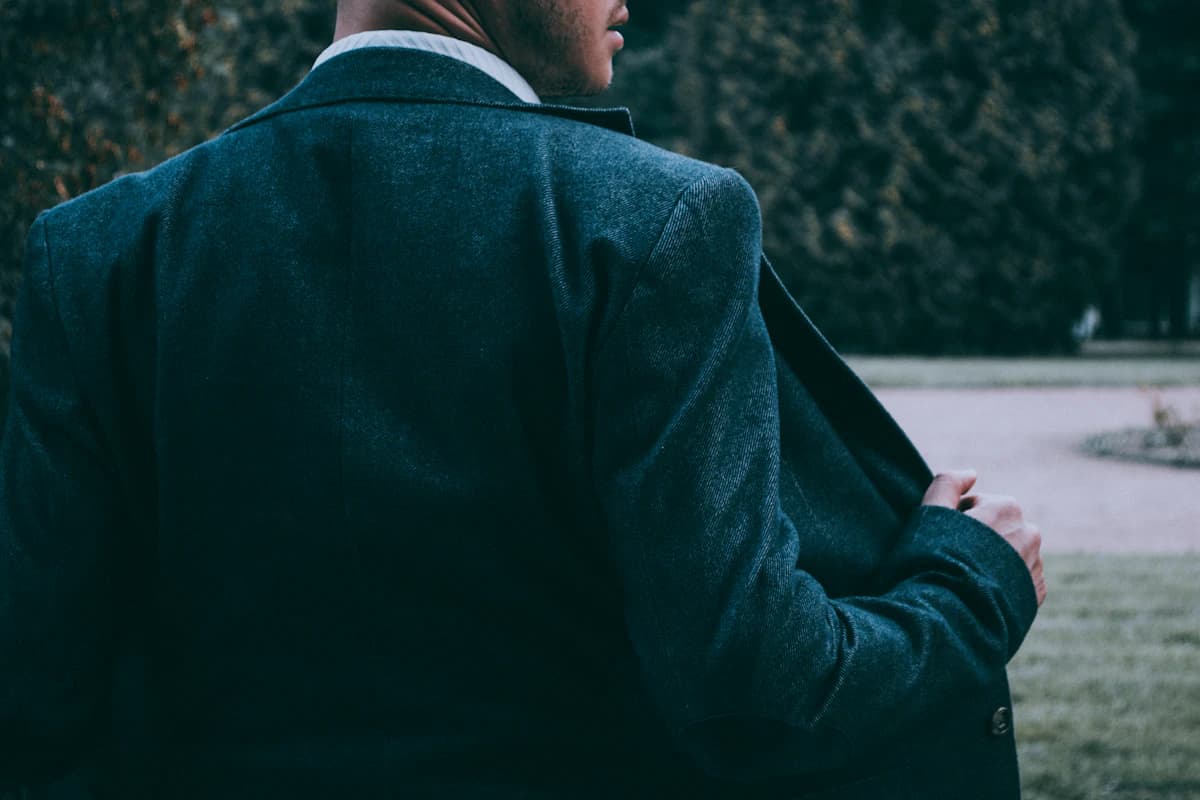
A navy blazer is the single jacket that does the most work in a men's wardrobe. It lifts trousers, denim, chinos, and knitwear into a deliberate register without committing to a suit. The catch is that almost everyone buys their first blazer wrong: a sharp, glossy suit-jacket-pretending-to-be-a-blazer, paired with the wrong trousers, the wrong shoes, and a shirt that drops the temperature back to corporate. The blazer below assumes a real blazer — softer construction, matte fabric, sensible buttons — and trousers that meet it at the same height.
Why it matters
A navy blazer adds structure to the upper body in a way that no knit or overshirt can. It signals intent without signalling office. That makes it the highest-leverage jacket a man can own: one piece that converts a basic shirt and trouser into something composed. It only works, though, when it does not look like an orphaned suit jacket. The fabric, the buttons, the stitching, and especially the trousers underneath are what separate a blazer from a half-suit.
Buying and wearing checks
What to look for
- Matte wool — hopsack, fresco, flannel, or fine tweed. Anything with a shiny suit-fabric sheen reads as a stranded suit jacket.
- Soft shoulder construction — minimal padding, no roped or sharply built shoulder line.
- Two-button single-breasted front — the most flexible silhouette and the easiest to pair down.
- Horn, corozo, or matte buttons — gold buttons push the jacket into nautical costume unless the rest of the outfit deliberately leans that way.
- Functional or convincingly stitched chest patch pocket adds blazer character; a jetted welt pocket reads more suit.
- Half-canvassed or full-canvassed construction over fused — a fused front bubbles after a few cleanings.
Fit rules
- Shoulder seam ends at the natural shoulder — anything past it looks borrowed.
- Jacket length covers the seat without reaching past the curve of your knuckles when arms hang.
- Sleeve length shows a quarter to half an inch of shirt cuff. Fully covering the cuff is the most common error.
- Chest closes cleanly with the top button — no pulling at the button or X-shaped wrinkles across the chest.
- Collar sits flat against the shirt collar with no gap behind the neck. A gap means the jacket is too big in the shoulders.
- Lapel width matches the chest scale — narrow lapels on a wide chest look out of proportion and vice versa.
Fabric and material
- Hopsack — open weave, breathes well, lightly textured, ideal for three-season wear.
- Fresco — high-twist worsted wool that resists wrinkles; the best summer-friendly option.
- Flannel — heavier, softer, ideal for autumn and winter, but commits the blazer to cooler months.
- Tweed — only if you want a more rugged blazer; pair carefully with trousers and shoes.
- Avoid blends with more than 10–15% synthetic — they sheen unpredictably and reject pressing.
- Avoid plain super-fine worsted suit fabric in dark navy — it's the fabric most likely to look like a homeless suit jacket.
Color pairings
- Mid-grey wool trousers — the most reliable pairing in any season.
- Cream or off-white chinos — best for late spring through early autumn.
- Charcoal trousers — quieter, more formal pairing for cooler weather.
- Olive cotton trousers — one of the few non-neutrals that pairs cleanly with navy.
- Dark denim — works only when the jacket is unstructured and the denim has zero fade.
- Avoid black trousers — almost always reads as a suit missing its other half.
Outfit formulas
Navy blazer + grey trousers + white shirt + brown loafers
- Soft navy blazer in hopsack or fresco
- Mid-grey wool trousers
- White Oxford or fine cotton shirt
- Mid-brown penny loafers
Office, business casual meetings, evening dinner.
The baseline formula. Grey separates the blazer from suit logic, white anchors the centre, brown shoes pull warmth into a mostly cool palette.
Navy blazer + cream chinos + light blue shirt + suede loafers
- Navy blazer
- Cream or off-white chinos
- Pale blue Oxford shirt
- Suede loafers in mid brown
Late spring through early autumn, garden parties, daytime weddings.
Cream brightens the outfit and suede dials down the formality just enough to stop the blazer reading like a wedding guest uniform.
Navy blazer + dark denim + Oxford shirt + leather sneakers
- Soft, unstructured navy blazer
- Straight, dark unwashed denim
- White or pale blue Oxford shirt
- Minimal white leather sneakers
Smart casual evening, weekend dinner, modern office.
Only works when the blazer is unstructured and the denim has no fade. Both pieces have to soften slightly to meet in the middle.
Navy blazer + charcoal trousers + fine knit polo
- Navy blazer
- Charcoal wool or wool-blend trousers
- Fine merino knit polo in white, cream, or navy
- Brown loafers or derbies
Office days without meetings, cooler weather, evening drinks.
The polo removes the shirt-collar formality without dropping the outfit into casual. Charcoal trousers prevent the jacket from looking suit-displaced.
Navy blazer + white T-shirt + tailored trousers
- Soft navy blazer
- Heavyweight plain white T-shirt
- Mid-grey or stone tailored trousers
- White leather sneakers or suede loafers
Casual summer, dressed-up holiday, evening on warm nights.
The T-shirt has to be heavyweight and well-fitted; a thin T-shirt undercuts the jacket. Tailored trousers do the heavy lifting on the bottom.
Navy blazer + turtleneck + wool trousers
- Navy blazer
- Fine merino or cashmere turtleneck in cream, camel, or charcoal
- Charcoal or mid-grey wool trousers
- Brown leather Chelsea boots or derbies
Cold-weather evening, dinner, business-casual winter wear.
Replaces the shirt-and-tie register with one continuous neckline. The texture of the knit does the work the tie would otherwise do.
Mistakes to avoid
- Wearing it with matching navy trousers and calling it a blazer — that's a suit, and a thin one at that.
- Pairing it with shiny dress shoes and a tie — the outfit will look like a half-finished business uniform.
- Buying a blazer with gold metal buttons unless you actually want the nautical look — the buttons commit the jacket harder than people realise.
- Fused construction in dark navy — the front bubbles after the first dry clean and the blazer is finished.
- Sleeves that cover the shirt cuff — instantly drops the outfit from composed to borrowed.